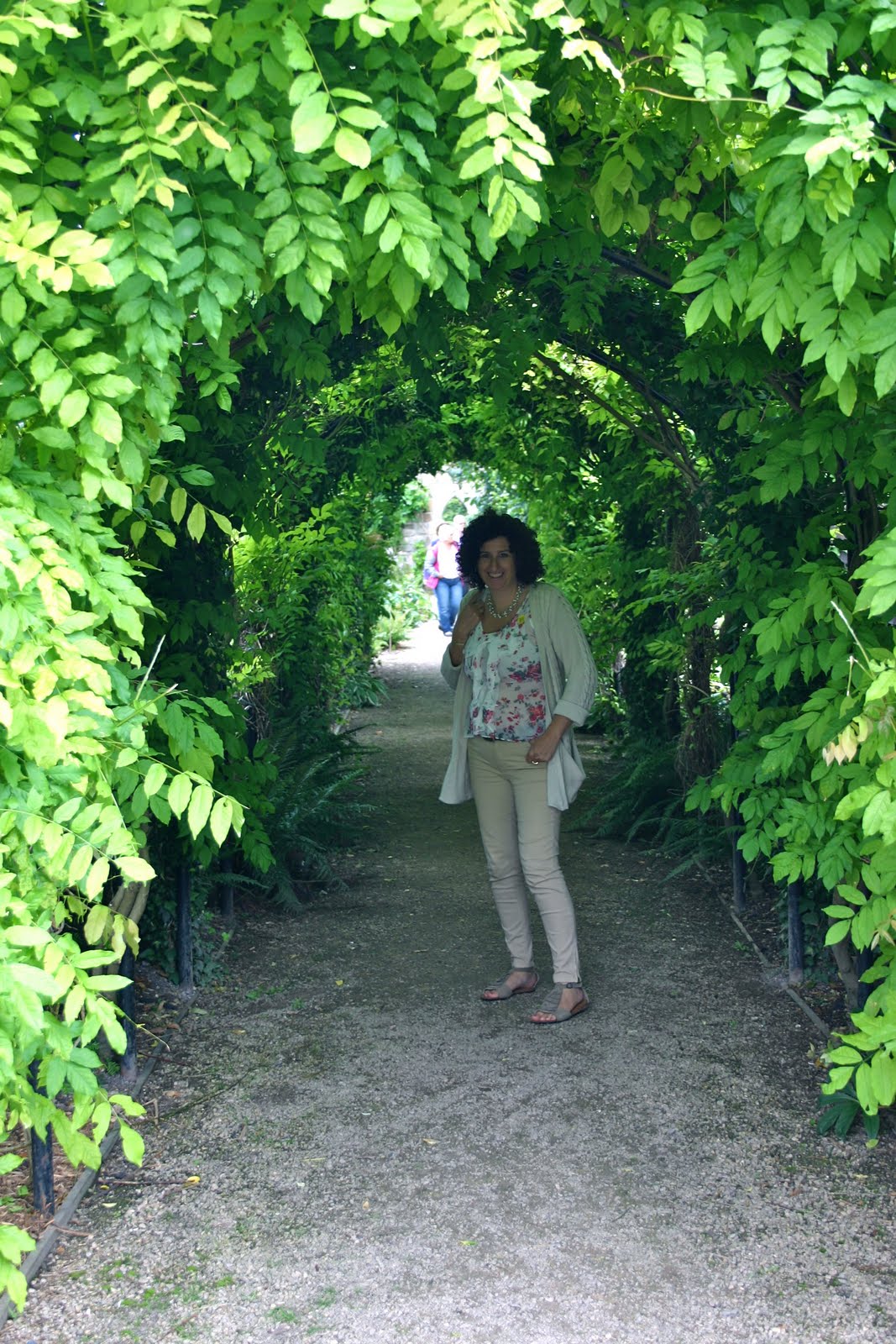
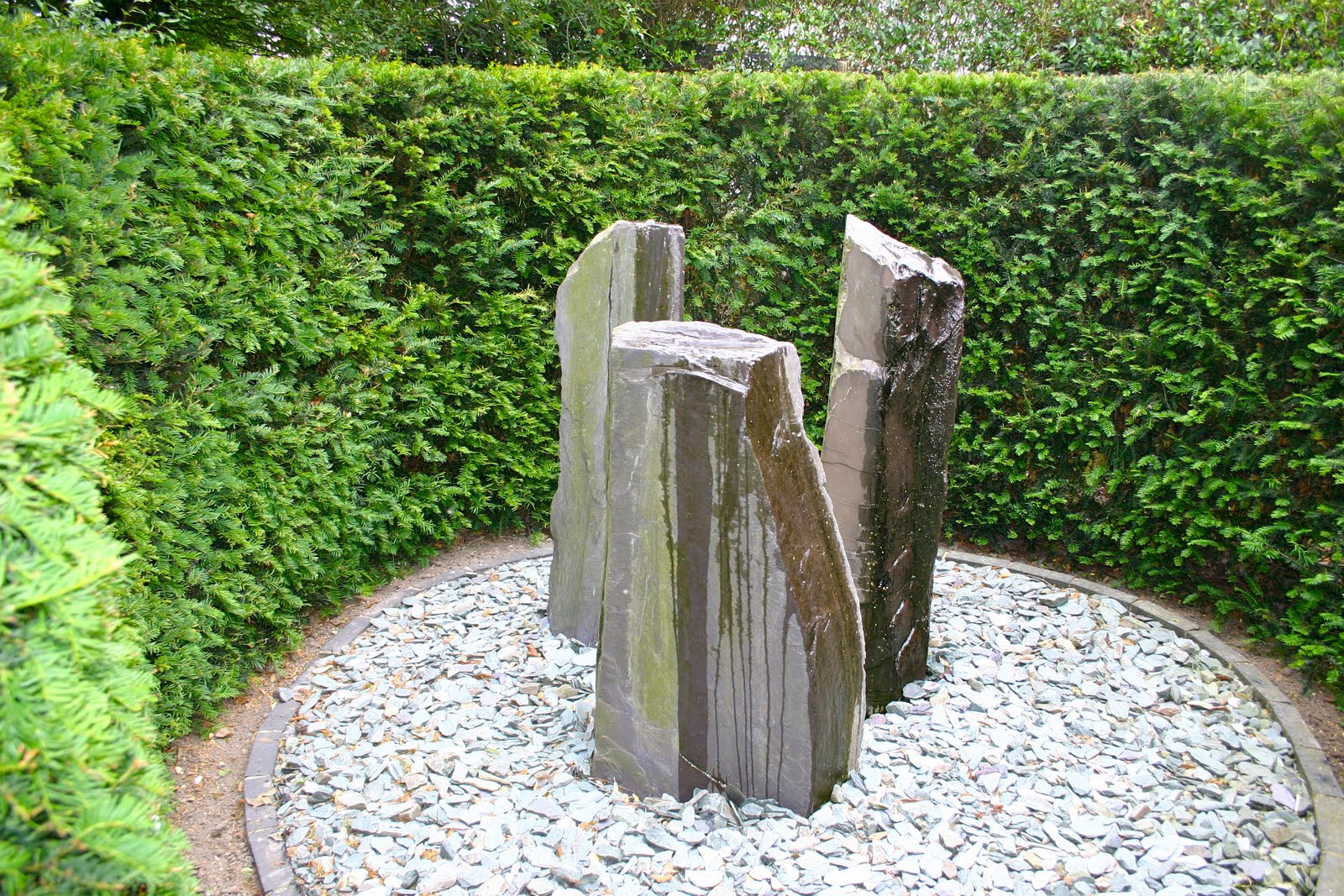
Positively the last post on my Cambridgeshire trip (boy did we pack in that day)! Burwash Manor shops and tea rooms are set in tranquil countryside just outside Cambridge. There is a lovely range of shops for both home and garden. A lovely way to spend an hour or two and lots of tempting things to buy.
Wednesday, 20 July 2011
Monday, 18 July 2011
Bunting is the new cupcakes
Bunting is the new cupcakes according to an article in The Guardian recently Bunting: the new cupcakes
Well I don't know about you but I've been a fan of the bunting revival for some time. Village fetes, street parties, sports days - it's nostalgia on a string.
I've just made some new pretty double sided bunting for my Etsy shop loveandlilac - here's how I made it.
You will need:
Scissors, card, pencil, assorted fabric sufficient for 18 double sided flags, 3.5 metres of 18mm bias binding, pins, thread.
First cut your pattern from the card. The top should be 13cm wide and the two sides 18cm.
Cut off the end of each point (avoid cutting through stitching) to avoid bulk and create a good point when you turn you flags right side out. With right side facing out fold and pin your binding over open end of flag. Space flags in your preferred order with approximately 9cm between each flag. Allow 40cm of binding at each end to make the ties.
Sew along the binding as close to the edge as possible, ensuring that both sides of fabric are sewn into the binding. At the last flag continue to sew in the same manner to the end of the binding. Press with warm iron.
Well I don't know about you but I've been a fan of the bunting revival for some time. Village fetes, street parties, sports days - it's nostalgia on a string.
I've just made some new pretty double sided bunting for my Etsy shop loveandlilac - here's how I made it.
You will need:
Scissors, card, pencil, assorted fabric sufficient for 18 double sided flags, 3.5 metres of 18mm bias binding, pins, thread.
First cut your pattern from the card. The top should be 13cm wide and the two sides 18cm.
Choose your fabric - 100% cotton work best. You can alternate a several colours/patterns, have a random mix, or a particular theme. I have used some assorted Cath Kidston fabric here.
Lay the card on your material and mark round with a white coloured pencil. Alternating the card position so triangles touch each other to make best use of your fabric. Cut out 36 flags. I'm generous with the amount of flags I use but you can use less and space further apart.
Take two pieces of fabric and place with right sides facing each other. Pin and then sew along both long sides. Start at the wide end and sew down to the point. With needle left in turn fabric and sew back up other side. Leave top open.
Cut off the end of each point (avoid cutting through stitching) to avoid bulk and create a good point when you turn you flags right side out. With right side facing out fold and pin your binding over open end of flag. Space flags in your preferred order with approximately 9cm between each flag. Allow 40cm of binding at each end to make the ties.
Sew along the binding as close to the edge as possible, ensuring that both sides of fabric are sewn into the binding. At the last flag continue to sew in the same manner to the end of the binding. Press with warm iron.
Et viola!
Pretty bunting!
Linking to Masterpiece Monday at http://www.boogieboardcottage.blogspot.com/
Saturday, 16 July 2011
And is there honey still for tea?
Last Sunday I had lunch at the Orchard Tea Rooms in Grantchester in Cambridge. It was something I'd always meant to do when in the area but somehow never quite got round to it. Oh what a delight it was!
The Orchard, first planted in 1868, became a Tea Garden purely by chance. A group of Cambridge students asked Mrs Stevenson of Orchard House if she would serve them tea beneath the blossoming fruit trees rather than, as was usual, on the front lawn of the House. The Orchard soon became a popular ‘up-river resort’.
A famous lodger at Orchard House was Rupert Brook the poet. He had moved out of Cambridge in 1909, hoping to escape his hectic social life there, but in vain. The charismatic young Brooke drew a constant stream of visitors, and eventually became the centre of a circle of friends, later dubbed by Virginia Woolf the ‘Neo-Pagans’. Brooke had fallen in love with his idyllic life in Grantchester, and, while in a homesick mood on a trip to Berlin, wrote one of his best-known poems, ‘The Old Vicarage, Grantchester’: the famous final lines immortalising afternoon tea in the Orchard.
Stands the church clock at ten-to-three And is there honey still for tea?
The Orchard today
My friend enjoying lunch (before the heavens opened and we ran for cover!)
Well we didn't have honey, but we did have a delicious lunch in the Orchard which can't have changed much from Brooke's time.
Just a few months before Brooke died in 1915, on a troop ship bound for Gallipoli, he wrote his poem The Soldier which contained these immortal lines on Grantchester.
If I should die, think only this of me:
That there’s some corner of a foreign field
That is forever England
Well we certainly thought it was a very special place.
Wednesday, 13 July 2011
Cambridgshire cottages
I couldn't resist taking some photos of the beautiful cottages in Lode when I visited their open garden event on Sunday. Aren't they pretty? Enjoy!
I'm linking to The House in the Roses Show off your cottage Monday today. Do go visit all the wonderful cottages on display today!
Monday, 11 July 2011
Lode Open Gardens
An open garden is a perfect summer Sunday afternoon pastime. Yesterday a pal and I went on a trip to Cambridgeshire and which included a visit to Lode Open Gardens. I'd never been to Lode before, a pretty village 5 miles from the city of Cambridge. I've been to many garden events but these really were 5 star gardens. Simply wonderful.
There were four gardens to visit. Wild Rose Cottage (below) had a lovely rambling garden, with chickens and ducks, which looked straight from the pages of Country Living magazine. The garden was entered up a sheltered windy path, gradually revealing the pretty cottage and its garden.
We could have lingered in this idyllic setting the entire afternoon but three more gardens beckoned.
Carpenders End was a barn conversion with sweeping lawns and pretty borders. The owner said he was up at 4am to keep it is such great shape. The early rises certainly paid off. The lawn was like Axminster carpet! We took a pit stop here for delicious tea and cake.
Onwards to the Old Vicarage which was quite a contrast with its garden rooms reminiscent of Hidcote.
My friend entering the garden through a beautiful arbour.
Finally, a garden that quite took my breath away. Behind a beautiful thatched cottage stood the garden of the former head gardener of nearby Anglesey Abbey. My first impression was a garden that was inspired by my favourite garden Great Dixter, and when I spoke to the owner he confirmed that his passion was for lots of colour and that he personally had known Christopher Lloyd, the garden writer, and owner of Dixter. It truly was a stunning garden.
Horse shoe hedges revealed beautiful water features - respite from the dazzling colour.
I brought back so much inspiration for my own little garden. Pictures rarely capture the real beauty that the eye beholds but I hope these photos have gaven some idea of how outstanding these gardens were.
Subscribe to:
Posts (Atom)